
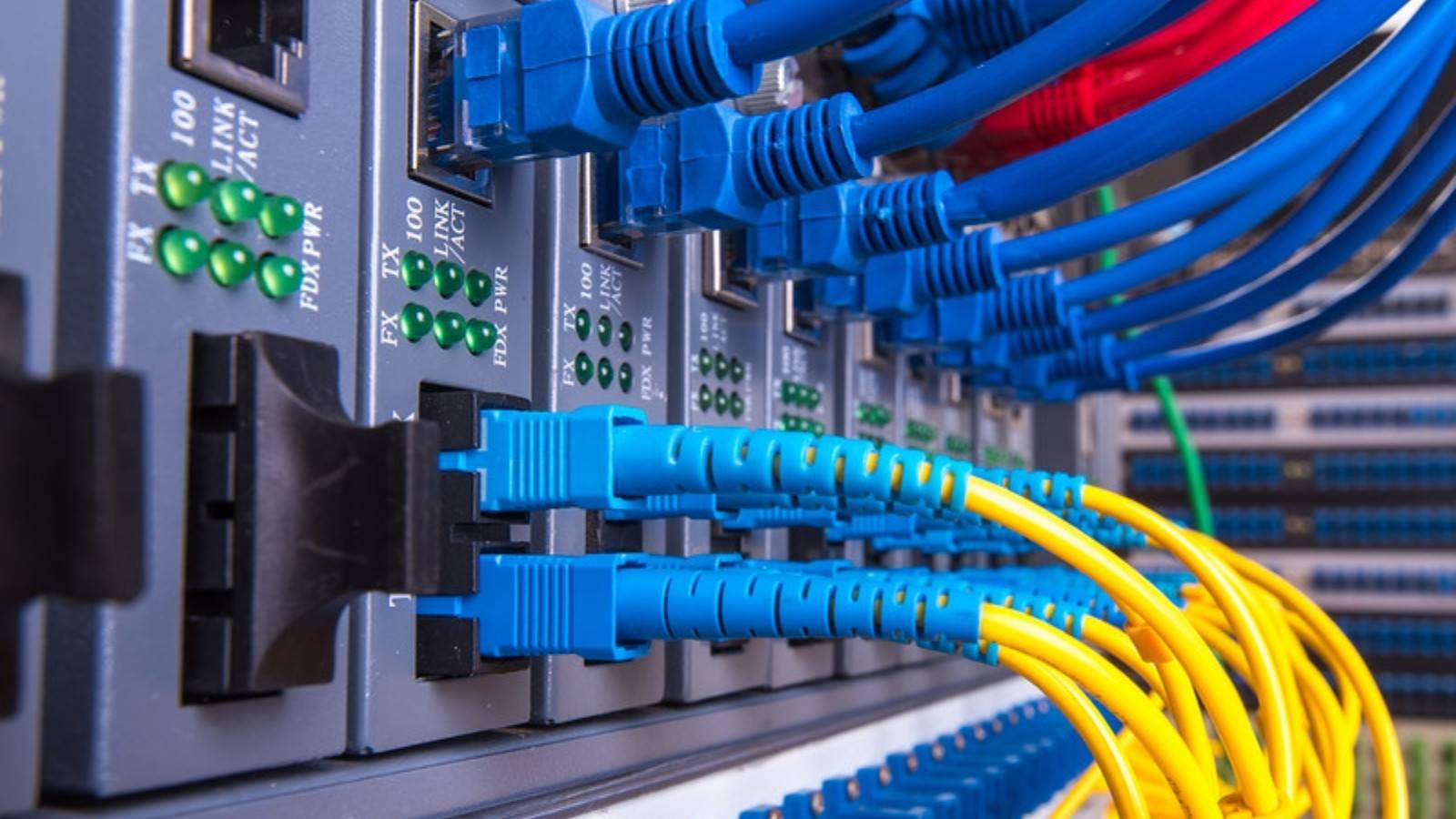
Fiber Optic Installation in Rochester, MN
Rochester Low Voltage Pros handles fiber optic installation when you're adding a second building, or when a link between buildings or floors keeps going down. This is fiber inside and between your own buildings, not internet service, for offices, clinics, manufacturers and multi-building sites. Send us a site plan, or set up a site walk.
Rochester Low Voltage Pros provides fiber optic installation to Rochester, MN and nearby cities including Byron, Kasson, Stewartville, Pine Island, Oronoco, Chatfield, Owatonna, Austin, Winona, Red Wing and Lake City.
- Free written estimate
- Site walk or a site plan
- Every strand tested and labeled
- Test results at handoff
Get Your Free Estimate
We will get back to you within one business day.
Fiber Optic Installation Services in Rochester
Fiber work runs from the first route plan to the last test, and it doesn't end at install. Splicing, termination, testing and repairs are all part of the job.
Fiber Network Design and Planning
Planning starts with the route: which closets and buildings connect, how far apart they are, and what the path looks like. That sets the fiber type (single-mode or multimode) and the strand count. Spare strands cost little to add now and save a second pull when the network grows.
Fiber Between Floors and Telecom Rooms
Inside a building, fiber links telecom rooms on different floors or at opposite ends of a long building. Plenum-rated cable rides in cable tray and lands in rack-mount enclosures and patch panels. The far end of the building gets the same speed as the room next to the server. Copper work inside the same building is covered under structured cabling installation.
Building-to-Building and Campus Fiber Links
Warehouses, shops and offices on one property can run as one network with outdoor-rated fiber, usually pulled through underground conduit. Each link runs point to point between buildings, and a second path can be added for redundancy. Conduit keeps the cable away from weather, frost and equipment damage.
Conduit, Innerduct, and Pathway Installation
Conduit is the pipe that protects fiber between buildings or through hard spaces. Innerduct is a smaller flexible tube inside it that keeps strands separated, and pull boxes give access on long runs. Good pathways protect the fiber and make the next cable pull faster and cheaper.
Fiber Optic Splicing
Splicing joins two fibers into one continuous strand. It's how long runs get joined, cuts get repaired and existing fiber gets extended. Most permanent splices are fusion splices, which melt the two ends together for the lowest signal loss. Existing fiber gets tested before anything is spliced into it, and splices are protected in splice trays and closures.
Fiber Optic Termination
Termination puts a connector on the end of each strand so it can plug into a patch panel or switch. LC and SC are the common connectors. Strands are either spliced to factory-made pigtails or fitted with field-installed connectors, then landed in rack-mount enclosures and labeled. Clean terminations prevent most connection problems.
Fiber Optic Testing
Every strand gets an insertion loss test, which measures how much light makes it from one end to the other. Connector end faces get inspected for dirt and scratches. OTDR testing sends a pulse down the strand and shows where any loss or break sits. You get written results that serve as a baseline if anything changes later.
Fiber Optic Repair
Construction, rodents and crushed conduit can all cut a fiber link. Testing finds the break, the damaged section gets spliced or replaced, and the link gets retested before the job closes. The goal is getting the connection between closets or buildings back and documented.
Fiber Upgrades from Copper Cabling
When copper runs between closets or buildings are too long or too slow, fiber can replace them or run alongside them. Upgrades can go in phases, one link at a time, so the network stays up while the new fiber goes in.
Who We Install Fiber For
Fiber usually shows up where distance, traffic or electrical noise pushes copper past its limits. These buildings run into that most.
Healthcare and Medical Facilities
Clinics, labs and medical offices move large imaging files and records all day. Fiber between closets keeps that traffic moving. Work gets scheduled around patient hours to keep disruption low.
Offices and Commercial Buildings
Office build-outs, renovations and tenant improvements often need fiber between telecom rooms. The work fits into the landlord's rules and the general contractor's schedule.
Manufacturing and Industrial Sites
Large facilities have long runs from the production floor to the office, plus heavy equipment that throws off electrical noise. Fiber isn't affected by that noise, which makes it the steadier choice across the floor.
Why Choose Fiber Over Copper
Fiber carries far more bandwidth than copper and keeps its signal over much longer distances, so one run can connect closets or buildings copper can't reach. It carries light instead of electricity, so motors and welders on a shop floor don't interfere with it. Extra strands pulled now give you room to grow without pulling new cable later.
Our Fiber Installation Process
Every fiber job follows the same four steps, so you know what's happening from the first walk to the final test.
- 1
Site Survey and Assessment
We walk the site, check existing pathways, closets and equipment, look for obstacles along the route, and talk through what the link needs to do.
- 2
Design and Free Estimate
The survey becomes a plan: fiber type, strand count and route. You get a free written estimate and a timeline.
- 3
Installation
Fiber gets pulled and placed, then spliced and terminated. The site stays clean and safe, and work is staged to keep disruption to daily operations low.
- 4
Testing, Documentation, and Handoff
Every strand is tested and labeled. You get test results and as-built documentation, plus a walkthrough of the finished work.
Areas We Serve Around Rochester
We install fiber in Rochester, Byron, Kasson, Stewartville, Pine Island, Oronoco, Chatfield, Owatonna, Austin, Winona, Red Wing and Lake City. If your site is outside that list, it's still worth a call.
Fiber Optic Installation FAQs
Common questions from facility and IT teams planning fiber work.
Is this fiber internet service?
No. The fiber installed here runs inside and between your own buildings, connecting closets and networks you already own. Your internet provider brings internet service to the building.
How long does a fiber installation take?
It depends on the number of links, the distance between closets or buildings, whether conduit is already in place, and site conditions. A link inside one building moves faster than a new run between buildings. The site survey gives you a firm schedule.
How much does fiber optic installation cost?
The main drivers are distance, whether conduit exists or has to be installed, strand count, the number of terminations and splices, testing, and site conditions. A free site visit leads to a written estimate with each item listed.
Single-mode vs multimode: which do I need?
Multimode handles shorter runs. Single-mode covers long distances, like links between buildings, and leaves the most room for future speed. The right choice depends on distance and the equipment on each end, and you'll get a recommendation after the survey.
Can you work around business hours?
Often, yes. Fiber installs can be phased, one link at a time, so downtime stays low. Cutover to the new fiber gets planned with your IT team. The schedule gets set on the site walk.
Get a Fiber Optic Installation Estimate in Rochester, MN
Send us a site plan or tell us which buildings need to connect, and we'll set up a site walk. The estimate is free and written.