
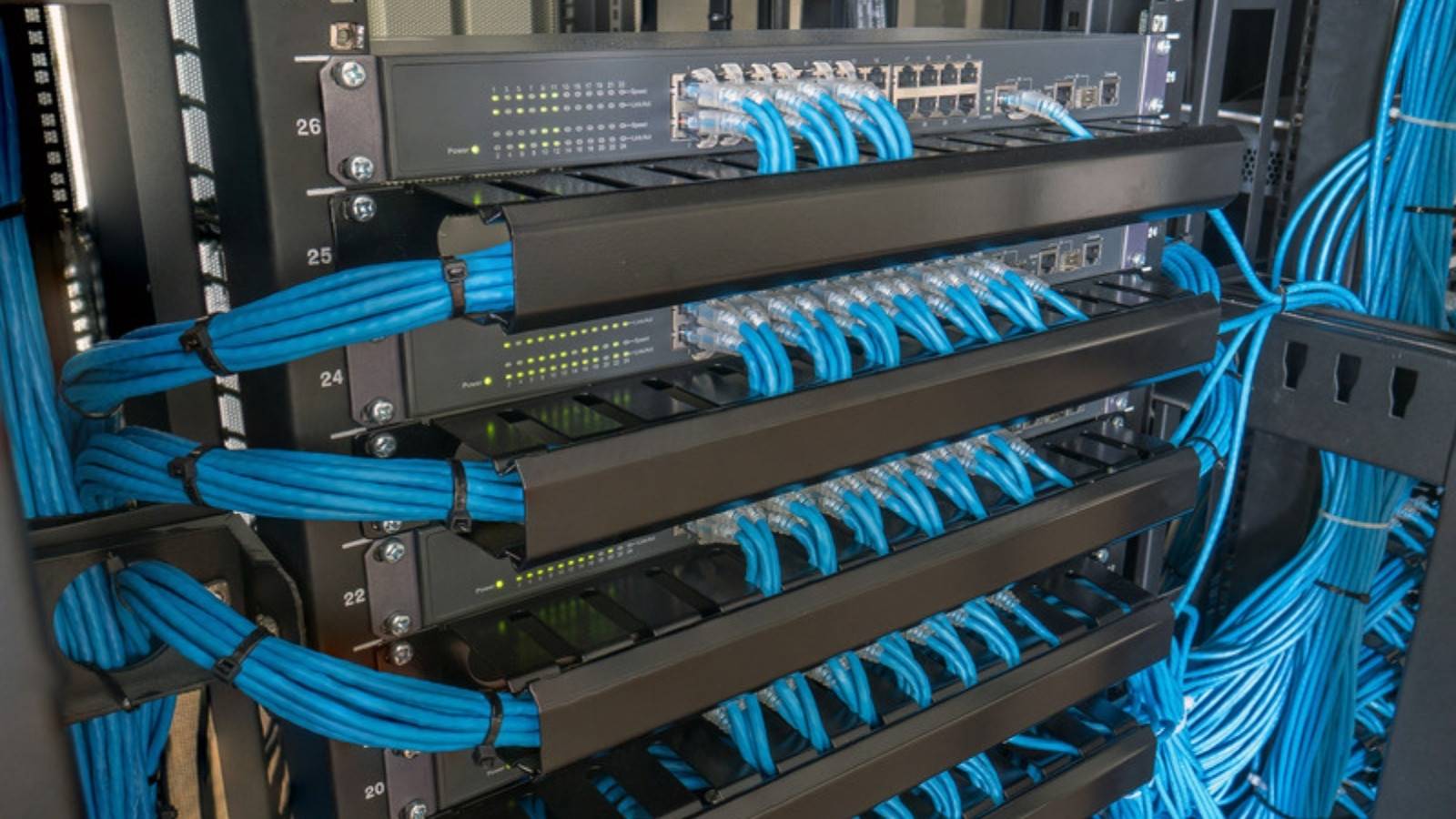
Structured Cabling Installation in Rochester, MN
Rochester Low Voltage Pros handles structured cabling installation when you're building out a space, moving in, or opening a new location. We plan the wiring behind your internet, phones and Wi-Fi as one system, from the closet to every desk. Call or tell us about your space. We'll set up a site walk.
Rochester Low Voltage Pros provides structured cabling installation to Rochester, MN and nearby cities including Byron, Kasson, Stewartville, Pine Island, Oronoco, Chatfield, Owatonna, Austin, Winona, Red Wing and Lake City.
- Free written estimate
- Site walk before the estimate
- Every run tested
- Labels at both ends
Get Your Free Estimate
We will get back to you within one business day.
Structured Cabling Services in Rochester
Every run follows the same layout from the closet to the wall jack, so changes later stay small.
Server Room and Data Closet Buildouts
The data closet is where every cable in the building ends up, so it gets planned first. That means the rack or wall-mount cabinet, ladder rack to carry cable into the room, a grounding busbar to bond the rack, and space for the switches and UPS (battery backup) your IT provider installs. Switches run warm, so the layout keeps airflow clear.
Patch Panels, Racks, and Cable Management
A patch panel is the row of numbered ports where every cable in the building lands. Short patch cords connect those ports to the switch, so moving a desk means swapping one cord and never touching the wall. Racks and cable managers keep those cords off the floor.
Backbone Cabling Between Floors and Buildings
Backbone cabling is the main trunk line linking the main closet to every other closet, across floors or into a second building. Short runs can be copper. Longer or busier links are usually fiber, covered on our fiber optic installation page. Backbone rides in ladder rack, conduit or innerduct, and sizing it with spare capacity now costs less than pulling a second one later.
Horizontal Cabling to Every Work Area
Horizontal cabling is the copper run from the patch panel to each wall jack for desks, printers, phones, and wireless access points. Each run is one continuous Cat6 or Cat6A cable. It rides on J-hooks above the ceiling, uses plenum-rated cable where that ceiling moves air, and is labeled to match its panel port.
Cable Testing, Labeling and Documentation
Every run gets tested end to end before the job is called done, and anything that fails gets fixed and retested.
What you get when we're done:
- Test results for every run
- Matching labels at both ends of every cable
- A port map showing which jack goes to which panel port
- As-built drawings showing where each run went
Telecom Room Cleanup and Abandoned Cable Removal
Plenty of older buildings have a closet nobody wants to open. A cleanup re-terminates cable onto new patch panels, labels every port, swaps tangled cords for ones cut to length, and pulls old cable from past tenants out of the ceiling. The electrical code expects accessible cable that isn't tagged for future use to come out. The work goes one panel at a time, so you stay online.
New Construction and Tenant Build-Out Cabling
On a new build or tenant build-out, cable goes in at rough-in, while the studs are open and the ceiling grid isn't hung. Termination, testing and labels come at trim-out, after paint. Work follows the general contractor's schedule, and the jack count gets locked in with your IT provider early. Adding a jack on the drawings costs far less than adding it after drywall.
Who We Cable
Every kind of building uses its cabling differently. A clinic can't lose its front desk, and a warehouse needs runs that reach the far wall.
Medical and Dental Clinics
Clinics depend on the network for electronic health records, digital imaging, phones and check-in. Work gets planned around patient hours, one area at a time, so exam rooms stay open. Imaging equipment and workstations get their own labeled runs back to the closet.
Offices and Professional Services
Offices need a jack at every desk, printers that stay connected, phones, and access points where the signal reaches. Conference rooms usually need more runs than people expect. In leased space, the plan often lines up with a tenant build-out and the landlord's rules for ceiling work.
Manufacturing and Warehouses
Shop floors are hard on cable. Runs are long, ceilings are high, and motors, welders and VFDs (variable frequency drives) put out electrical noise. Cable gets routed away from power, with shielded cable or fiber where the noise or the distance calls for it.
How Our Installation Process Works
Every structured cabling job follows the same four steps. You'll know what's going in, where it goes and what it costs before any cable gets pulled.
- 1
Site Walk and Free Estimate
It starts with a walk through the space, or the floor plans if it isn't built yet. You get a free written estimate listing the run count, cable type, closet equipment and testing.
- 2
Planning and Cable Pathways
Next comes the plan: Cat6 or Cat6A, where each jack goes, and the pathways cable takes, like J-hooks above drop ceilings or conduit through hard walls. This is where surprises like a hard-lid ceiling get caught.
- 3
Installation
Cable gets pulled along the planned pathways and terminated on jacks and patch panels. In an occupied building the work goes room by room. Ceiling tiles go back and scraps get picked up each day.
- 4
Testing and Handoff
Every run is tested before the crew leaves. Then we walk the closet with you or your IT provider and hand over the paperwork listed above.
Why Rochester Businesses Choose Us for Structured Cabling
Rochester Low Voltage Pros is locally owned and works in Rochester and the towns around it. Every run is tested and labeled, estimates are free and written out line by line, and the job ends with a clean closet. You also get a clear answer on who handles what.
Who does what:
- We run, terminate, test and label the cable.
- Your IT provider sets up switches, Wi-Fi and the network.
- Your internet company brings service to the building.
- An electrician handles power, including outlets for the rack.
Areas We Serve Around Rochester
We install structured cabling in Rochester, Byron, Kasson, Stewartville, Pine Island, Oronoco, Chatfield, Owatonna, Austin, Winona, Red Wing and Lake City. Outside that list? Call anyway. Larger commercial jobs are often worth the drive.
Structured Cabling FAQs
Answers to common questions before a structured cabling project.
How much does structured cabling cost?
It depends on the job, and a site walk gets you a written estimate. The main drivers are the number of runs, Cat6 or Cat6A, run length, ceiling access, closet equipment and testing. A low bid that skips testing and labels can cost more later, when the next change turns into hours of tracing unlabeled cable.
Do I need a full structured cabling system or just a few new drops?
If you're building new, gutting a space or doing a tenant build-out, plan the full system together. If the building is open and you only need a few more jacks, that's network cabling installation. The site walk sorts out which one you have.
When should cabling be planned on a new build?
Before the walls close. At rough-in the studs are open, so cable goes in fast and nothing gets cut or patched. It's also when the closet location and pathways are easiest to change, so bring cabling in while the floor plans are being finalized.
How long does an installation take?
It depends on the number of runs, ceiling and wall access, and whether the building is new or occupied. New construction follows the general contractor's schedule. Occupied spaces go in phases so you stay open. Your written estimate includes a schedule.
Can you work around business hours?
Often, yes. Occupied offices and clinics are usually cabled around business hours, one area at a time, so the floor stays open. The schedule gets set on the site walk, once we know which areas can't go down.
Get a Structured Cabling Installation Estimate
Send us your floor plan or drop count, or set up a site walk. The estimate is free and written out line by line.